
TL;DR
- Landing pages convert better than generic apartment websites because they focus every renter on one action: book a tour, check availability, or apply.
- High-performing lease-up landing pages need a specific headline, strong visuals, repeated CTAs, short forms, trust signals, and mobile-first speed.
- Message match matters: the promise in the ad should be repeated immediately on the page after the click.
- Dedicated landing pages are easier to test than full websites, so leasing teams can improve headlines, CTAs, forms, and images week by week.
- The page is only the first step. Fast CRM routing, text/email follow-up, retargeting, and tour confirmation are what turn the lead into a lease.
Every multifamily marketer wants the same thing: more tours, faster leases, and a stronger return on every advertising dollar. But one step in the funnel quietly determines whether the budget performs or disappears: the landing page.
If ads are driving traffic but few visitors are scheduling tours, it may not be the audience or the offer. It may be the page renters land on after they click.
Landing pages are the digital leasing office for marketing campaigns. They guide renters from curiosity to conversion. When designed strategically, they can produce far more tours than generic websites or listing pages. When neglected, they become the silent leak that drains ROI.
This guide breaks down how to build high-performing leasing landing pages that turn clicks into leases using the same conversion principles Lease Ups applies for multifamily developers and property managers.
Why Landing Pages Outperform Traditional Websites
A common mistake in multifamily marketing is sending paid traffic from Google Ads, Meta Ads, email, or retargeting campaigns to a community’s main website. It feels efficient, but it often hurts conversion.
Websites are built for browsing, not action
A full property website is designed to inform. It includes menus, galleries, blog links, neighborhood pages, resident resources, and other distractions that pull users away from the primary goal: scheduling a tour.
Landing pages remove friction
A dedicated landing page narrows focus to one clear action: book a tour, check availability, join a waitlist, or apply. With fewer links, fewer decisions, and faster load times, you control the renter journey.
Landing pages keep messaging consistent
Ads make promises: “Tour luxury apartments downtown,” “Move-in specials available,” or “Now leasing pet-friendly homes.” If the renter clicks and lands on a page that does not immediately reinforce that message, momentum drops.
Landing pages let you mirror ad messaging exactly, creating a seamless path from click to conversion.
They are easier to test and improve
Unlike full websites, landing pages can be optimized quickly. You can A/B test headlines, forms, images, and CTAs in real time, then refine performance week by week.
In a lease-up, conversion speed equals revenue speed. Landing pages are not a luxury. They are a conversion tool.
The Anatomy of a High-Converting Leasing Landing Page
Every great leasing landing page follows a similar structure. Whether you are marketing a new development, promoting move-in specials, or capturing waitlist sign-ups, these elements consistently drive results.
1. A headline that grabs and grounds
The headline should capture attention and tell renters exactly what is being offered.
- “Now Leasing Brand-New Apartments Near Downtown Austin”
- “Modern 1–3 Bedroom Homes with Skyline Views”
- “Luxury Meets Location — Move-In Ready This Spring”
Keep it specific, relevant, and benefit-driven. Avoid vague taglines like “Live Your Best Life” or “Elevate Your Everyday.” Renters search for solutions, not slogans.
2. Strong visual hierarchy
Humans process visuals faster than text. The hero image or video should immediately communicate lifestyle, location, and quality. Real spaces usually convert better than stock imagery. If renderings are all you have before opening, supplement them with lifestyle images that convey community and comfort.
3. One clear call-to-action
The CTA is the conversion trigger. Keep it consistent, visible, and action-oriented.
- Schedule a Tour
- Check Availability
- Join the Waitlist
- Claim This Offer
Repeat the CTA at least three times: above the fold, mid-scroll, and near the bottom.
4. A simple, fast lead form
The form is where conversions happen or die. Keep it short: name, email, phone, and move-in date. Optional questions like preferred floor plan or pet ownership can come later.
- Use large buttons optimized for mobile.
- Avoid CAPTCHAs or extra steps that frustrate users.
- Show an instant confirmation message after submission.
- Route leads immediately into the CRM.
A frictionless form creates higher completion rates and more tour opportunities.
5. Proof of trust
Renters crave reassurance. Add credibility markers that reduce hesitation.
- Star ratings or review snippets.
- “Professionally Managed By” messaging.
- Resident testimonials or short quotes.
- Award logos, association logos, or local recognition.
Even subtle trust signals can lift conversion because they make the property feel safer and more tangible.
6. Mobile-first performance
Most apartment seekers browse on their phones. The landing page should load quickly, stack cleanly, and make buttons easy to tap. If it does not function flawlessly on mobile, it is costing tours.
Design Psychology: Turning Browsers Into Bookings
High-performing landing pages are built on renter behavior, not design trends. These principles separate average pages from conversion machines.
Clarity beats creativity
Renters are making fast decisions based on clarity and convenience. Be direct. Tell them who you are, what you offer, where you are, and what to do next.
Limit choices
More options create hesitation. Keep navigation minimal and focus the page around one or two CTAs. Every extra decision reduces momentum.
Use visual direction
Design should guide the eye toward the form or button. Arrows, contrast, whitespace, and section order should all support the next action.
Trigger urgency honestly
Urgency motivates action when it is real.
- “Now Pre-Leasing — Move-In April 2025”
- “Only 4 Units Remaining”
- “Apply by Friday for 2 Weeks Free Rent”
Use urgency carefully and keep it compliant, accurate, and aligned with actual availability.
Reinforce benefits repeatedly
Renters skim. Repeat the value proposition in different ways throughout the page so they do not miss the strongest reason to book a tour.
Why Landing Pages Can Convert 5x Higher
Across campaigns, the pattern is consistent: focused landing pages tend to outperform general websites in both lead volume and conversion rate.
- Community websites often convert around 1–2% of traffic.
- Dedicated landing pages can reach 4–8% when the offer, traffic, and follow-up are aligned.
That lift happens without increasing ad spend. The page reduces friction, improves message alignment, and focuses every click on a single outcome. Faster load times, simpler forms, tighter copy, and visual focus compound together.
Whether a property is in lease-up mode, stabilizing occupancy, or rebranding, paid traffic performs better when every click has a focused destination.
How to Audit Your Current Landing Page
You do not need a full redesign to see major gains. Start with these questions:
- Headline: Is it specific to the community, location, and offer?
- CTA: Does the tour or availability button appear above the fold?
- Mobile speed: Does the page load quickly on a phone?
- Form: Can a renter complete it in under 20 seconds?
- Trust: Does the page show at least one review, rating, testimonial, or management proof point?
- Tracking: Are form submissions, calls, button clicks, and tour bookings measured correctly?
Fixing these basics can double results without new ad spend.
Integrating Landing Pages Into the Marketing Ecosystem
A landing page is not a standalone asset. It is the center of the leasing conversion funnel.
- Ads → landing page → lead form → CRM → follow-up: Paid campaigns should send renters directly to the campaign page, not a homepage or ILS listing.
- Organic SEO → landing page: Location-based keywords such as “new apartments in [city]” and “luxury apartments [neighborhood]” can support qualified traffic.
- Email and retargeting → landing page: Re-engagement campaigns should point to tailored pages with updated availability, incentives, or tour options.
- Analytics → continuous optimization: Track click-through rates, submissions, bounce rate, call taps, and booked tours weekly.
When all channels point to a focused landing page, marketing becomes more cohesive, measurable, and efficient.
The Power of Testing and Iteration
The best landing pages are not “set it and forget it.” They are living tools that evolve with data.
Run simple A/B tests such as:
- Headlines: “Now Leasing Downtown” versus “Modern 1–3 Bedroom Apartments in Downtown.”
- CTAs: “Book a Tour” versus “See Availability.”
- Hero images: Exterior rendering versus lifestyle shot.
- Forms: Three required fields versus four required fields.
Small variations can produce large improvements. Document what works and roll those learnings into future lease-up campaigns.
Common Landing Page Mistakes
Even strong marketers lose tours when the landing page creates avoidable friction.
- Sending ad traffic to a homepage instead of a dedicated campaign page.
- Using long forms that intimidate users.
- Overloading the page with too much text or too many visuals.
- Ignoring mobile usability.
- Forgetting thank-you pages or confirmation messages.
- Failing to connect the form to CRM and leasing-team workflows.
Each issue may look small, but together they can cost thousands in lost tours.
Beyond the Click: Converting Leads Into Tours
A strong landing page does not end at form submission. It starts a relationship.
Once a renter fills out the form:
- Respond within 10 minutes when possible.
- Confirm tours instantly by text or email.
- Personalize follow-up based on the floor plan, offer, or source they engaged with.
- Continue nurturing non-responders through retargeting and automated email reminders.
The best landing pages are backed by equally strong operations. Conversions happen when marketing and leasing teams move in sync.
Why Landing Pages Are a Lease-Up Superpower
A landing page does more than capture leads. It builds confidence, drives urgency, and amplifies every other channel you are investing in.
Without one, paid traffic can disappear into a maze of distractions. With one, every click becomes a measurable opportunity.
That is why Lease Ups treats landing pages as a foundation of multifamily marketing strategy. A single high-performing page can turn ad dollars into appointments, browsers into bookings, and traffic into tenants.
Frequently Asked Questions
What is a leasing landing page?
A leasing landing page is a dedicated campaign page designed to turn apartment traffic into one specific action, such as booking a tour, checking availability, joining a waitlist, or submitting a lead form.
Why not send apartment ads to the property homepage?
Homepages usually include too many paths and distractions. A campaign landing page keeps the renter focused on the offer they clicked and makes the next step easier to complete.
What should be on an apartment landing page?
Include a specific headline, strong visuals, one clear CTA, short lead form, trust signals, floor-plan or availability context, mobile-first speed, tracking, and a clear follow-up path.
How many CTAs should a landing page have?
Use one primary CTA, repeated throughout the page. The wording can vary slightly, but the desired action should stay consistent so renters are not forced to choose between competing next steps.
How do landing pages support lease-ups?
Lease-ups need speed. Dedicated landing pages make campaigns more measurable, reduce friction, and help convert paid traffic into tours faster than a generic browsing experience.
From Click to Lease
The modern leasing journey begins long before a renter sets foot in the lobby. It starts with a click, and that click deserves a clear, compelling destination.
Your landing page is that destination. Done right, it can increase tour volume, lower acquisition costs, and turn marketing into a predictable performance system.
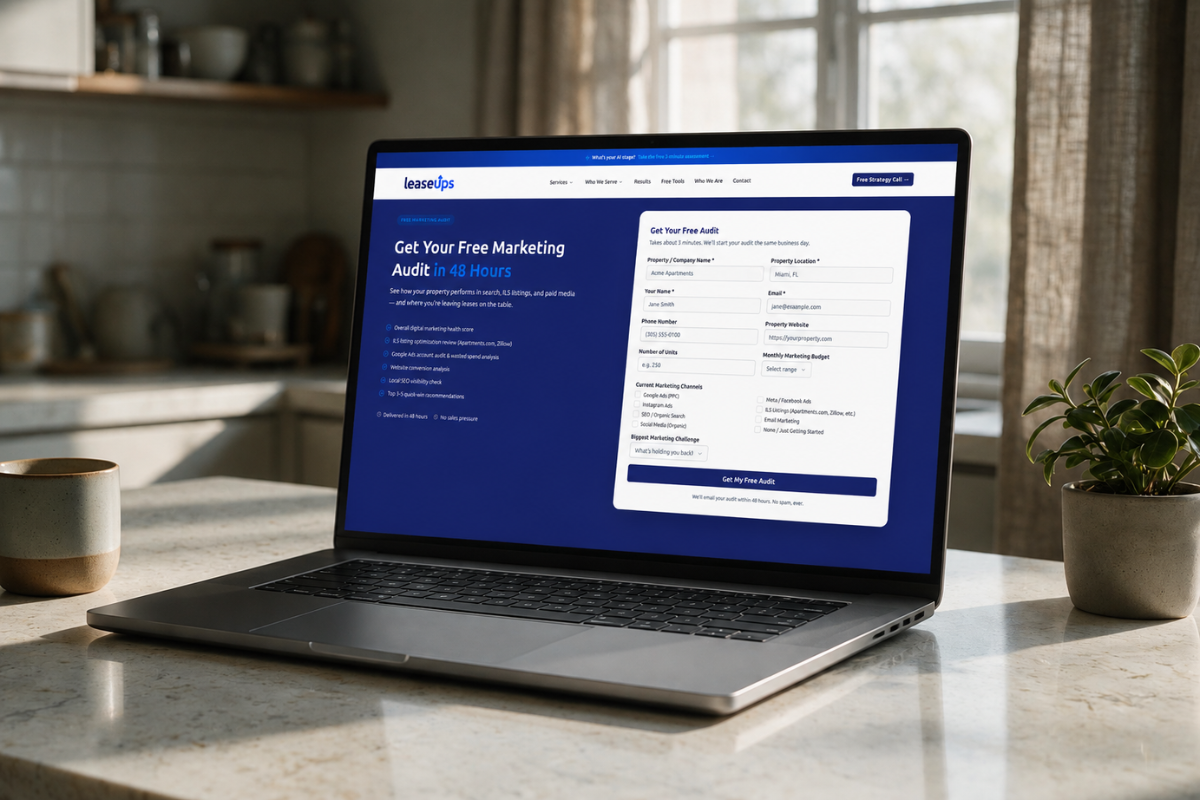
Stop treating landing pages like side projects. Treat them like revenue generators. If you want to find the biggest leaks between click and lease, start with a free Marketing Snapshot.